The environment in which men live shapes their physical and psychological condition in ways that are substantial but often underestimated. Research across multiple disciplines — environmental science, epidemiology, occupational health, and urban studies — has documented a broad range of ways in which the external world interacts with male physiology and behaviour. This article surveys the major categories of environmental influence, drawing on this research to provide a general understanding of how context shapes well-being.
The Scope of Environmental Influence
When researchers discuss environmental factors in the context of well-being, they typically distinguish between the physical environment (the material conditions of air, water, light, and space), the built environment (the design and characteristics of the human-made spaces in which people live and work), and the social environment (the network of relationships, community structures, and cultural patterns within which individuals exist). All three interact with male physiology and psychology, often in complex and intersecting ways.
It is worth noting at the outset that these interactions describe statistical associations observed across populations — they describe tendencies rather than deterministic effects on any individual. The relationship between any given environmental variable and a specific physiological outcome is typically mediated by many other factors, including genetics, age, activity levels, and social context.
The Physical Environment: Air, Light, and Space
Air quality represents one of the more extensively studied environmental variables in the context of physical well-being. Epidemiological research has consistently documented associations between elevated concentrations of particulate matter and gaseous pollutants in ambient air and various measures of respiratory and cardiovascular function in human populations. Men in urban environments with high traffic density are typically exposed to higher concentrations of relevant pollutants than those in rural or lower-density settings.
The body's regulatory systems must work to manage the physiological load of air pollution exposure, and this appears to have consequences for overall systemic function over time. The mechanisms through which air quality affects physiology are an active area of research, involving inflammatory responses, oxidative processes, and the functioning of the autonomic nervous system.
Light exposure plays a fundamental role in regulating circadian rhythm — the roughly twenty-four-hour biological clock that coordinates a wide range of physiological processes, including sleep-wake cycles, hormone secretion, and metabolic function. Adequate exposure to natural daylight, particularly in the morning hours, is associated with more robust circadian entrainment. Reduced access to natural light — as a consequence of indoor work environments, urban shade, or high-latitude living — is one factor associated with disrupted circadian patterns in urban populations.
The Built Environment and Physical Activity
The design characteristics of the spaces in which men live and work have measurable associations with the extent to which they engage in physical activity. Walkable urban environments — characterised by mixed land use, pedestrian infrastructure, and accessible green space — are associated with higher levels of habitual physical activity than environments that require or encourage sedentary transit. The relationship between built environment characteristics and activity levels is well-documented in public health research, though the causal pathways are complex and involve socioeconomic factors alongside physical design.
| Environmental Factor | Category | Observed Associations in Research |
|---|---|---|
| Air quality (particulate matter) | Physical | Studied in relation to respiratory and cardiovascular function across populations |
| Natural light access | Physical | Associated with circadian rhythm regulation and sleep quality in multiple settings |
| Green space proximity | Built | Linked to physical activity levels, stress indicators, and restorative attention |
| Walkability | Built | Associated with habitual activity levels and population health indicators |
| Social cohesion | Social | Associated with psychological resilience and stress responsiveness in community studies |
| Occupational environment | Social/Built | Linked to both physical exposures and psychosocial stress patterns |
| Climate and season | Physical | Associated with seasonal variation in activity levels, dietary patterns, and mood |
Access to Green Spaces
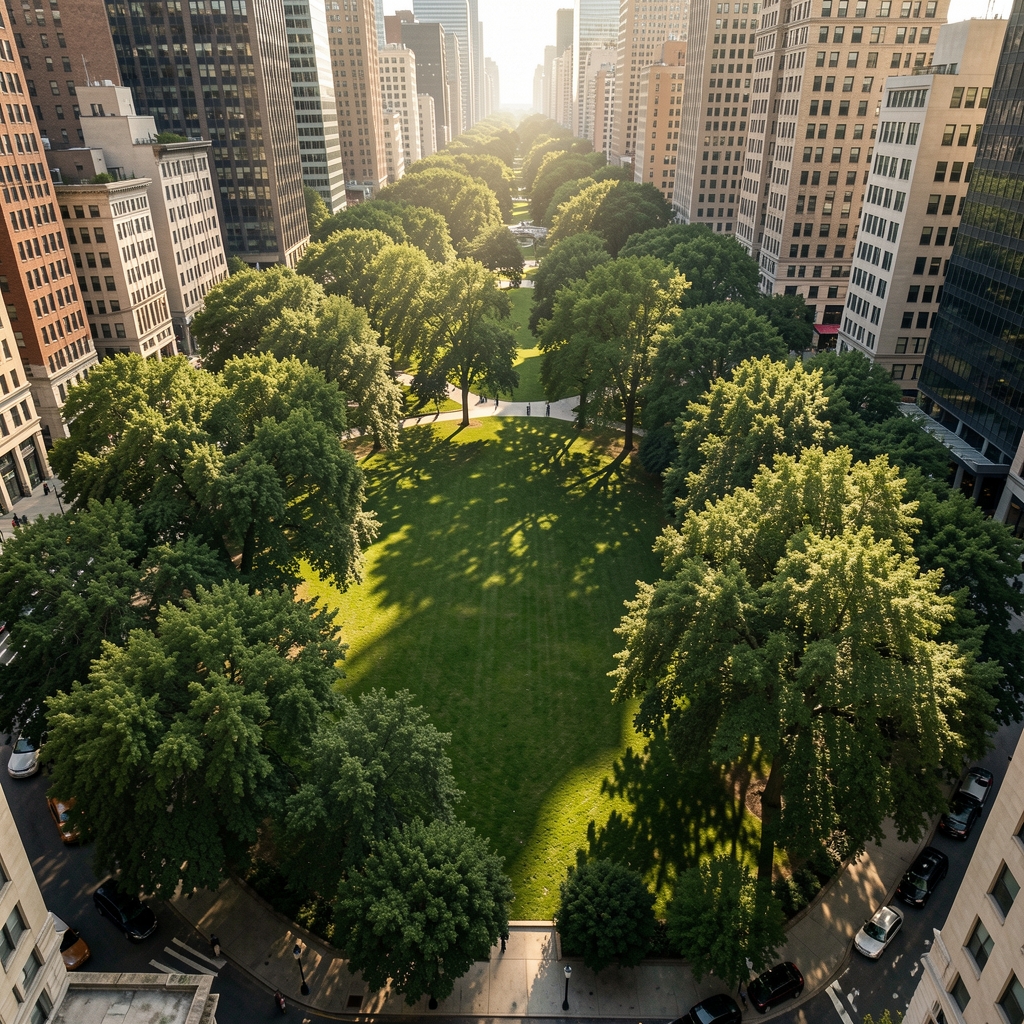
Research in environmental psychology has examined the effects of exposure to natural environments on psychological and physiological measures. Studies have documented associations between time spent in green spaces — parks, forests, and other natural environments — and measures of perceived stress, attentional fatigue, and subjective well-being. Researchers have proposed several mechanisms through which these effects might operate, including the restorative properties of natural settings for attentional resources and the physical effects of reduced noise and pollution levels in such environments.
In the context of urbanisation — a dominant global demographic trend particularly pronounced in Southeast Asia and Indonesia — the relative accessibility of green space varies considerably between urban residents. This variation has attracted attention from public health researchers interested in how urban design shapes the distribution of well-being across populations.
The Social Environment
Social conditions constitute an environmental influence that is frequently overlooked in discussions focused on physical or nutritional factors. The quality and density of social connections, the sense of community belonging, and the experience of social support have all been examined in relation to physiological outcomes in male populations. Research in the field of social epidemiology has documented associations between social isolation and various indicators of physiological function, while social cohesion and community integration appear to be associated with greater resilience across various measures.
Occupational environments represent a particularly important dimension of the social environment for men. The physical conditions of work — sedentary versus active, indoor versus outdoor, isolated versus collaborative — interact with psychosocial factors such as workplace autonomy, workload, and the quality of professional relationships. Occupational health research has documented how these combined physical and psychosocial conditions interact with long-term physiological patterns.
Climate and Seasonal Variation
The broader climatic environment also interacts with male physiology in ways that researchers have documented across multiple dimensions. Seasonal variation in temperature, light availability, and food access has historically shaped dietary patterns, activity levels, and social behaviour. In tropical climates such as Indonesia's, where seasonal variation takes the form of alternating wet and dry seasons rather than the temperature extremes of temperate zones, the specific patterns of environmental influence differ from those documented in higher-latitude research settings.
Heat and humidity levels interact with physical exertion and fluid balance in ways that are well understood physiologically. The body's thermoregulatory systems are efficient but not unlimited, and extended work or activity in hot, humid conditions places additional demands on fluid balance and cardiovascular regulation that interact with dietary patterns, particularly hydration and mineral intake.
Reading Environmental Research
Understanding the role of environmental factors in well-being requires careful attention to the nature of the research base. Most findings in this area derive from observational epidemiology — studies that document statistical associations between environmental exposures and health outcomes in populations. Such studies cannot always establish causation with certainty, and the factors studied are typically highly correlated with each other and with socioeconomic conditions that operate independently. The goal of this article has been to outline the major dimensions of environmental influence as they have been described in the research literature, providing a contextual framework for thinking about how the external world shapes physical condition — without overstating the certainty or direction of effect for any individual.